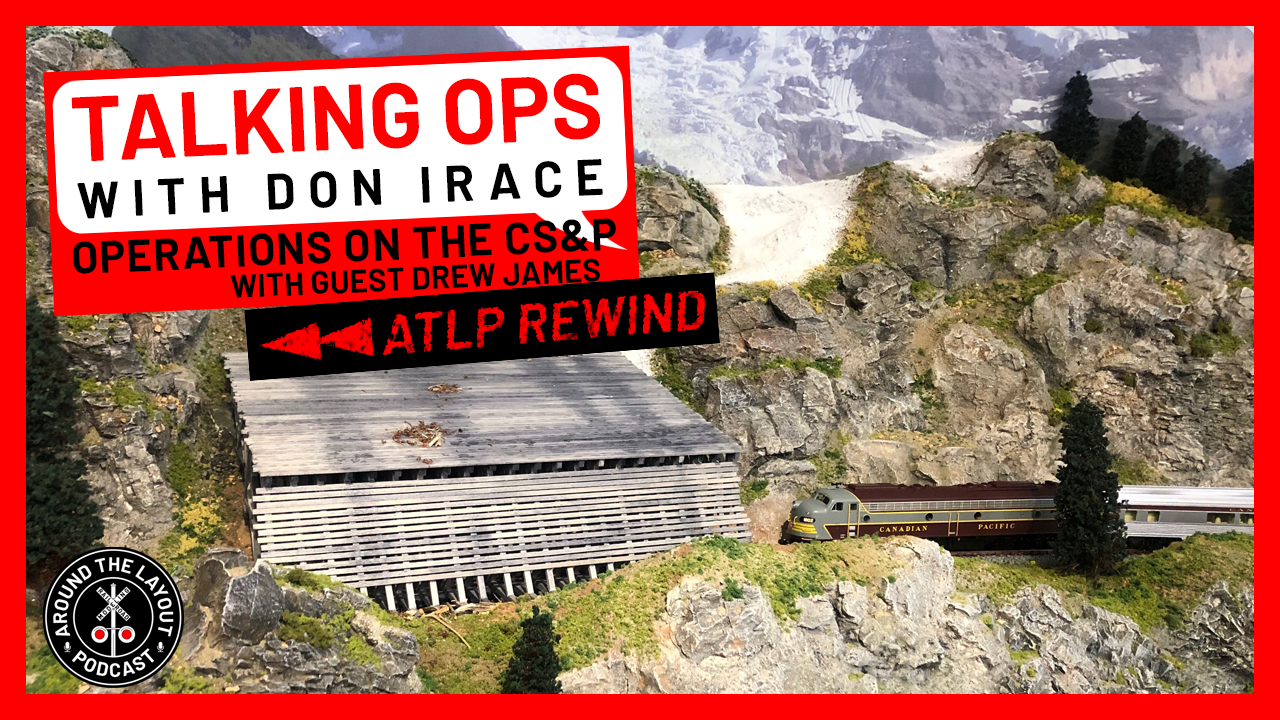
ATLP Rewind - Originally Released October 8, 2024
Drew James joins Around The Layout Podcast to discuss the evolution of operations on his Canada Spokane and Pacific Railroad (CS&P), a proto-freelance HO scale layout inspired by prototype practice and creative planning. The conversation explores the operational philosophy, systems, and tradeoffs that influence how a railroad can be purpose-built for fun, approachable operations—especially for visiting operators.
The discussion centers on practical decisions behind developing a layout with flexibility and operator enjoyment at its core. With experience hosting sessions for both regulars and new guests, Drew considers how tools like CTC signaling, car forwarding systems, and purposeful staging can shape the operating experience. The episode takes a close look at what works, what gets refined, and how the operating crew’s preferences and feedback inform ongoing changes.
About This Episode
The primary subject is the operational design and ongoing refinement of the Canada Spokane and Pacific Railroad, a north-south proto-freelance route situated between Calgary and Spokane. The layout is structured around long single-track mainline runs, five towns, and a double-ended staging yard, supporting an operational focus that prioritizes both plausibility and approachability. CTC signaling and carefully designed yard procedures aim to strike a balance between prototype practice and enjoyable, stress-free model railroad operations.
Decisions discussed include the transition from car cards and waybills to spreadsheet-driven switch lists, adjustments to train lineups to match operator interests, and the use of prototype-inspired features—such as a wye that now finds operational purpose thanks to insights from real-world railroad practice. Throughout, the conversation considers the challenges of maintaining interest for a rotating mix of visiting and regular operators while minimizing operational stress.
What We Discuss
Designing Operations for Guest-Friendly Sessions
Drew explains the importance of building a layout that is easy for guest operators to understand, starting with accessible CTC signaling rather than timetable-and-train-order operation. Switch lists are preferred over car cards and waybills to streamline car forwarding—especially when most operators are interested in clear guidance over detailed paperwork. The priority is to keep jobs enjoyable and avoid overwhelming first-time visitors.
Refining Systems Through Ongoing Feedback
The operational plan, car movement system, and yard assignments have evolved in response to operating sessions and feedback. For example, the spreadsheet-based switch list method allows precise control over car distribution, even if it’s labor-intensive to maintain. Train lineups have also shifted to provide more switching opportunities, responding to an increased interest among operators for local and town jobs over straightforward through trains.
Balancing Prototype Inspiration and Flexibility
The CS&P combines prototype-inspired features with deliberate compromises for fun and flexibility. CTC is used for its clarity and suitability for higher-than-prototype traffic levels, while the layout’s single-track main and hidden staging support a plausible sense of distance. Even features like a wye—originally without a defined use—are reimagined to allow for more interesting prototype-based movements as new ideas emerge.
Creating an Enjoyable Atmosphere and Reducing Stress
A central goal is reducing operational stress, particularly in the yard, by ensuring that crews have the cars they need at session start and not holding up trains due to late arrivals or missed connections. Regular restaging between sessions, a flexible crew lounge environment, and encouragement for operators to focus on enjoyment over perfection all contribute to a welcoming culture. Occasional tweaks—such as customs checks or slow orders—help keep regulars engaged.
Key Takeaways
• CTC signaling and spreadsheet-driven switch lists simplify operations for guest crews.
• The operating plan is regularly adjusted based on crew preferences and feedback.
• Prototype inspiration guides design choices but is balanced with flexibility for fun.
• Yard procedures are structured to minimize stress and support enjoyable sessions.
• Ongoing refinements, including small operational twists, help keep the experience engaging for both new and returning operators.
Thank you to our episode sponsor, Broadway Limited Imports:
https://broadway-limited.com/
Thank you to our episode sponsor, ScaleSigns.com:
https://scalesigns.com/
Thank you to our episode sponsor, Oak Hill Model Railroad Track Supply:
https://ohrtracksupply.com/
Rewind Episode Released October 12, 2026
